
Forbidden Fruit
A Love Letter to Apples, Myth and Memory

Apples: nature’s timeless gift—beloved around the world for their crisp, juicy flavour, and versatility in both sweet and savoury dishes. Ubiquitous though they may be, apples are anything but ordinary. For centuries, they’ve bridged the realms of mythology, tradition, symbolism, poetry, and art. They’ve embodied everything from health and temptation to knowledge—and even love. Every apple seems to carry these stories within, as if myths and meanings seed and sprout beneath their waxy paper—thin skins. Apples are a fruit that conjure something untamed and unpredictable. Part of the Rosaceae (rose-zay-see-ee)family, they are close cousins to wild roses—nature’s embodiments of freedom.
In Greek mythology, the apple (and the rose as it happens) was sacred to Aphrodite, the goddess of love. With their sweetness, round shape, and seeds, apples naturally became a perfect metaphor for her sphere of romance, beauty, and desire. Aphrodite may reign over love with an apple in hand, but as a mortal, I’m more likely to be seduced by a slice of perfectly baked apple pie.
From divine desire to human indulgence and shame, apples were chosen to symbolize the forbidden fruit in the book of Genesis. That one fateful bite in Eden, shared by Eve with Adam, has become an enduring emblem of human temptation and weakness. Life, however, would be dull without the quiet allure of curiosity and desire. Perhaps it was never meant as punishment, but an invitation to disarm and indulge. As I imagine it, God saw apples as gifts of nature. Dappled orbs scattered beneath their trees’ canopies, ripe for the taking. Walk down any country road in October, and you’ll find them strewn about. Dozens nestled in the scent of musky leaves, half-hidden by Mother Nature. It’s practically sinful not to indulge—and I always do, with a sense of glee, rewards carried home in my hands and pockets. According to commonly held beliefs, this ritual is, in fact, good for me.
Most English speakers know of the 19th-century proverb, “An apple a day keeps the doctor away”—a phrase repeated in childhood that instilled belief in an apple’s inherent goodness. The overlapping symbolism in such a small fruit is remarkable: from temptation and desire to worldly health benefits, and even a hint at what we hold most dear. This final sentiment is captured in the phrase “apple of my eye.” The symbolism is rooted in language itself and stems from Old English æppel of the eye, which literally meant the pupil. Over time, the meaning shifted from literal to metaphorical, eventually referring to someone greatly valued in our lives. Ultimately, setting myths, stories, and proverbs aside, the best part of apples is simple: they are delicious.
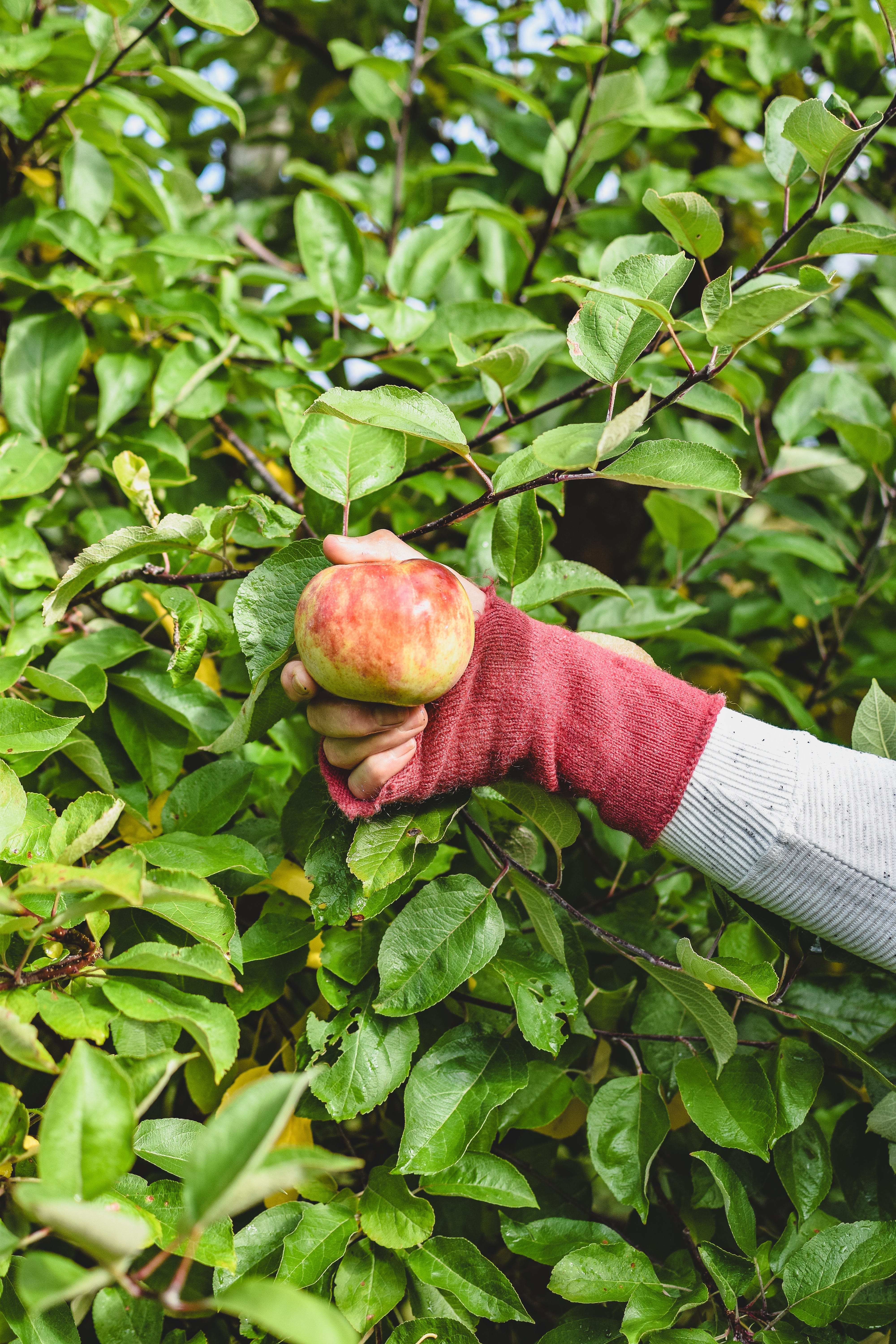
Apples edge between sweet and tart, firm and juicy—and even their less desirable trait—mealy. Even if you are familiar with a given variety, you won’t quite know what you’ll get until you take a bite.
Endless varieties to enjoy fresh, baked, juiced, dried and even fermented. Apples are a year-round staple in my kitchen. Most simply, I go for slices dipped in natural peanut butter, or diced and added to my oatmeal. Chopped into a salad is always good, and I even love them for scooping up hummus (some find this weird, but I think it makes a delicious, easy snack)
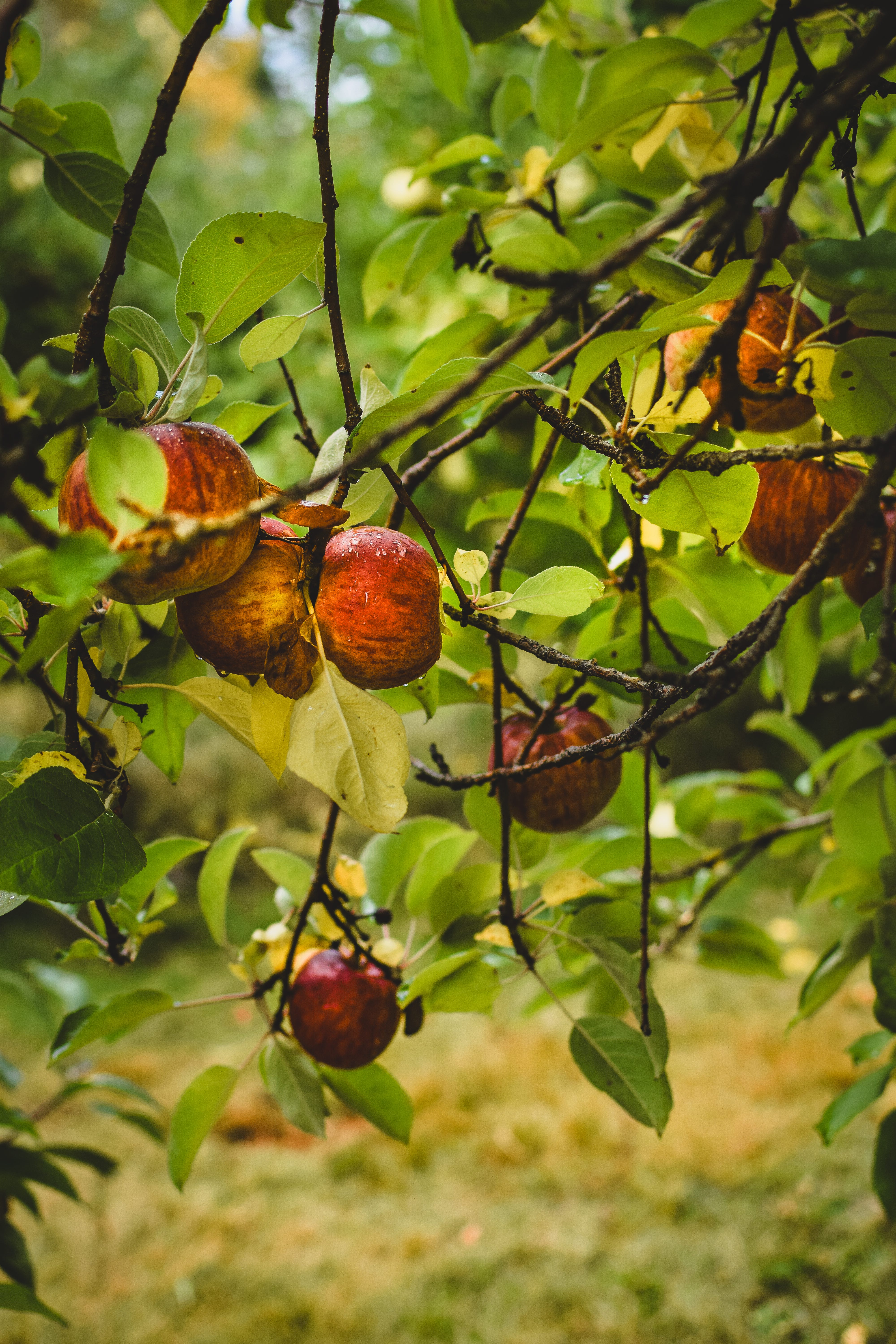
When October arrives, however, apples fulfill a singular purpose: to be celebrated in their sweetened and baked form. Whether encased in pastry, covered with a crisp topping, tucked into pancakes or muffins, or even stuffed and baked whole, they are always paired with a touch of cinnamon—as if every bite contains not just flavour—but the techniques, moments and stories from generations before.
Growing up, we most often enjoyed them in Mum’s apple crisp. The crunchy oat, butter, and brown sugar topping is pure perfection. Do me a favour, though—miss me with those non-oat versions of apple crisp. Disagree if you want, but for me, the topping serves an important purpose—contrast. Oats provide added structure and lend a toasty chew to the topping. It’s an addictive alchemy: the meeting of buttery crunch against tender, sweetened fruit, and to be honest, sneaking bites of the addictive topping when passing through the kitchen is a core memory. I’ve always been a thief of delicious bites. Mum will gladly tell you about the time she found one-year-old Trisha crawling up onto the dining table in our first home, tearing into a block of butter set out on the table. Perhaps the earliest sign I’d have a career in food.
While I could have happily never moved on from the warmth, comfort and nostalgia of mum’s apple crisp recipe, I eventually grew to love beautiful European-style desserts.
In my early 20s, when I first got serious about cooking, there was a specific specialty that captured my heart: French-style tarts. I experimented with all kinds—sweet, savoury, creamy and fruit. I remember making my first French Apple Tart. What made it unique, was the layer of apple sauce spread over the pastry base before artfully arranging sliced apples over top. Milling my own apples and making my own sauce wasn’t as satisfying as I had hoped. I just wanted to make a damn tart, but at the time, I wasn’t a fan of taking shortcuts in the kitchen, now I’m perfectly happy to buy some apple sauce. Once the apple tart is baked, an apricot glaze seals it—adding shine and a touch more sweetness. It’s a gorgeous dessert that has an elevated feel.
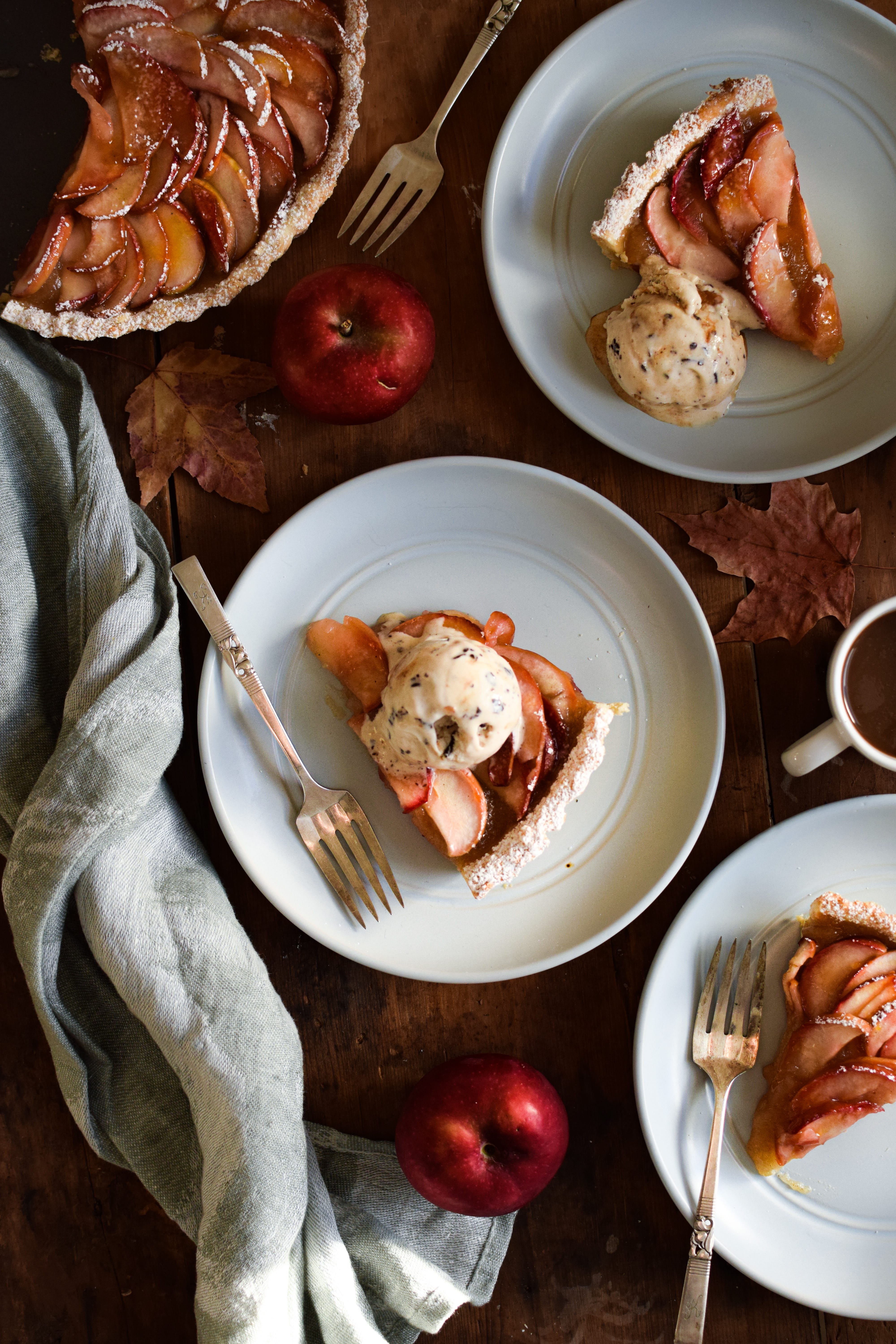
While I love them, I can’t say they are better than a home-style apple pie, it’s simply that they had captured my attention for so long I never got around to baking pie like my mum makes. This is something I wanted, needed to correct—and I did. On my most recent trip to Fredericton, I made my very first apple pie with my mum—and I’m officially in love with the result and process.
One of the main distinctions between many tarts and pies is the type of fat used to prepare the dough. Different types of fat react differently when baked. What you choose depends on the result you are trying to achieve. When it comes to flavour, butter reigns—it yields a pastry base that bakes up like one large shortbread cookie, and there’s nothing quite like the aroma of buttery crust baking up until golden in the oven. The perfect choice for open-style tarts. Pies, on the other hand, are all about choosing a pastry with that distinct flaky, fall-apart texture—this is where shortening comes in. Because of shortening’s higher melting point, it helps maintain layers as the dough bakes. Some bakers, including myself most recently while testing a pecan pie recipe, combine fats to give you the best of both worlds—a crust with that irresistible buttery flavour with extra flake.
Mum narrated the recipe as I proceeded, offering guidance throughout the process. “A pinch of this,” and “no, less than that.” She mused about the time she accidentally added baking soda instead of baking powder. It’s funny in hindsight—something we can laugh about now. “It tasted absolutely horrible” she said.
I had sliced and tossed a few too many apples in their cinnamon sugar coating, a perfect excuse to indulge. The smell of sweet fruit hit my nose as I tasted, the sugar coating sticking to my fingers, then dissolving on my tongue. We nibbled as we worked, adding the finishing touches to the pie.
I added the top crust, using both hands to crimp and seal the edges as artfully as I could. Mum then showed me the specific design she, and her mother, would delicately carve into the pie. The purpose—to release steam—but as I took my knife, etching out a nostalgic pattern resembling foliage, it seemed to be about so much more.
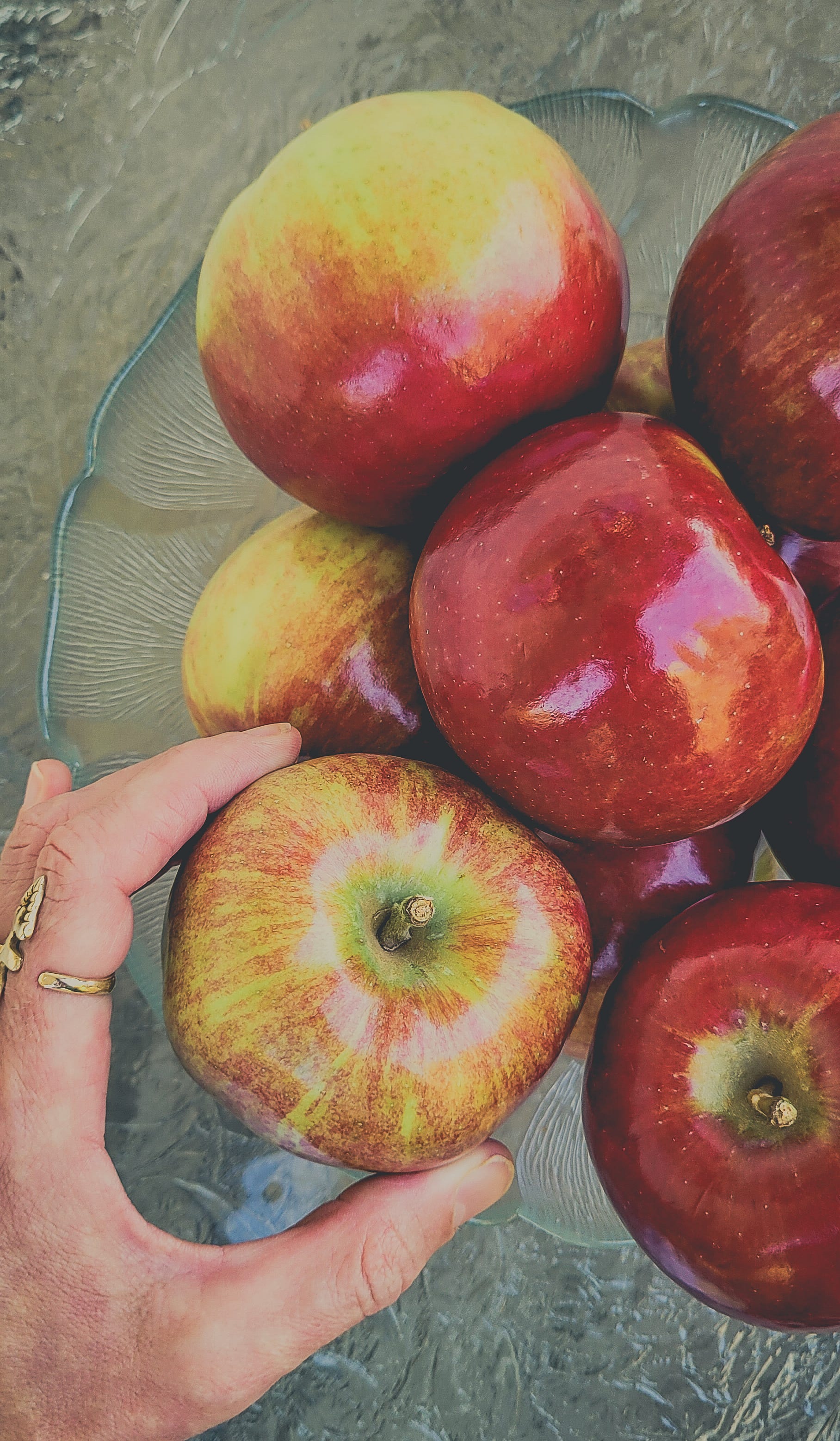
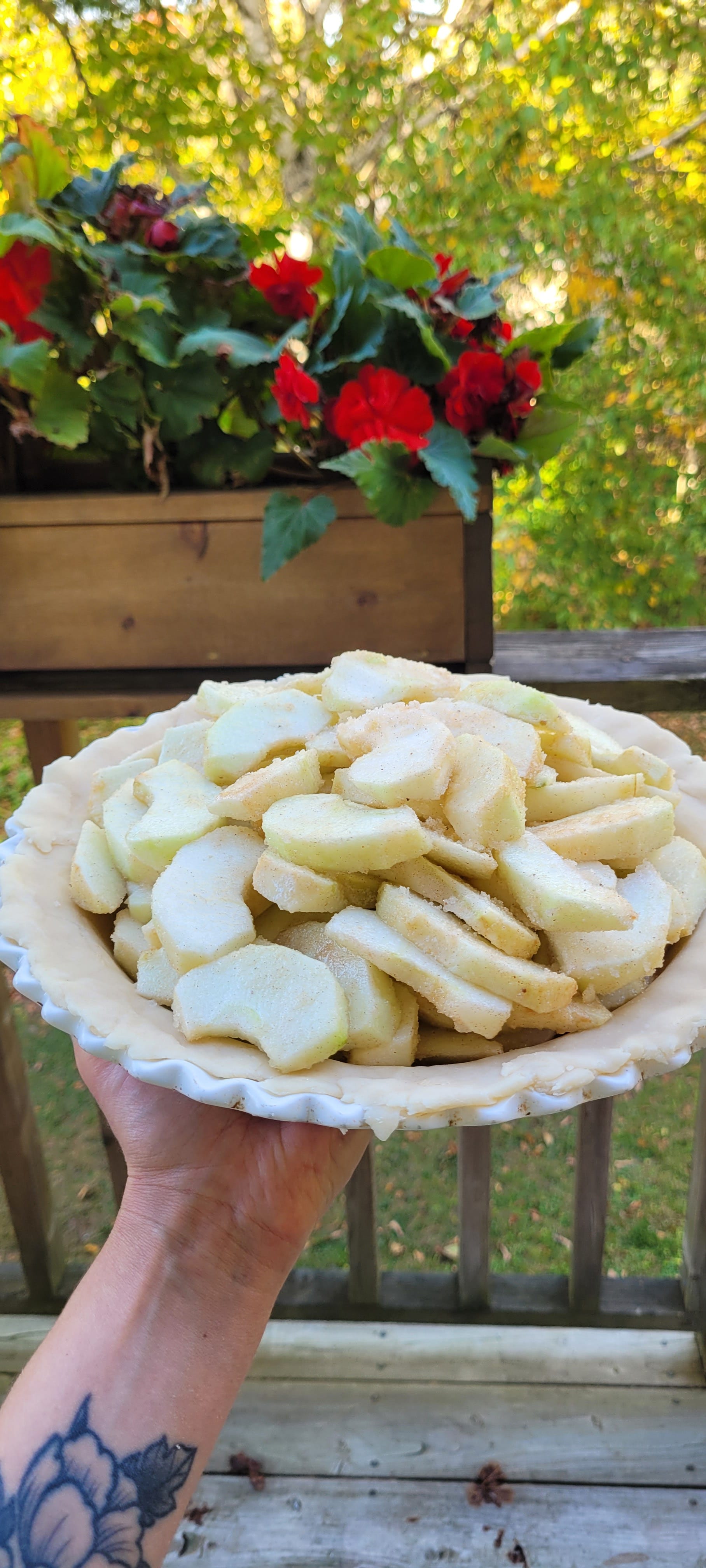
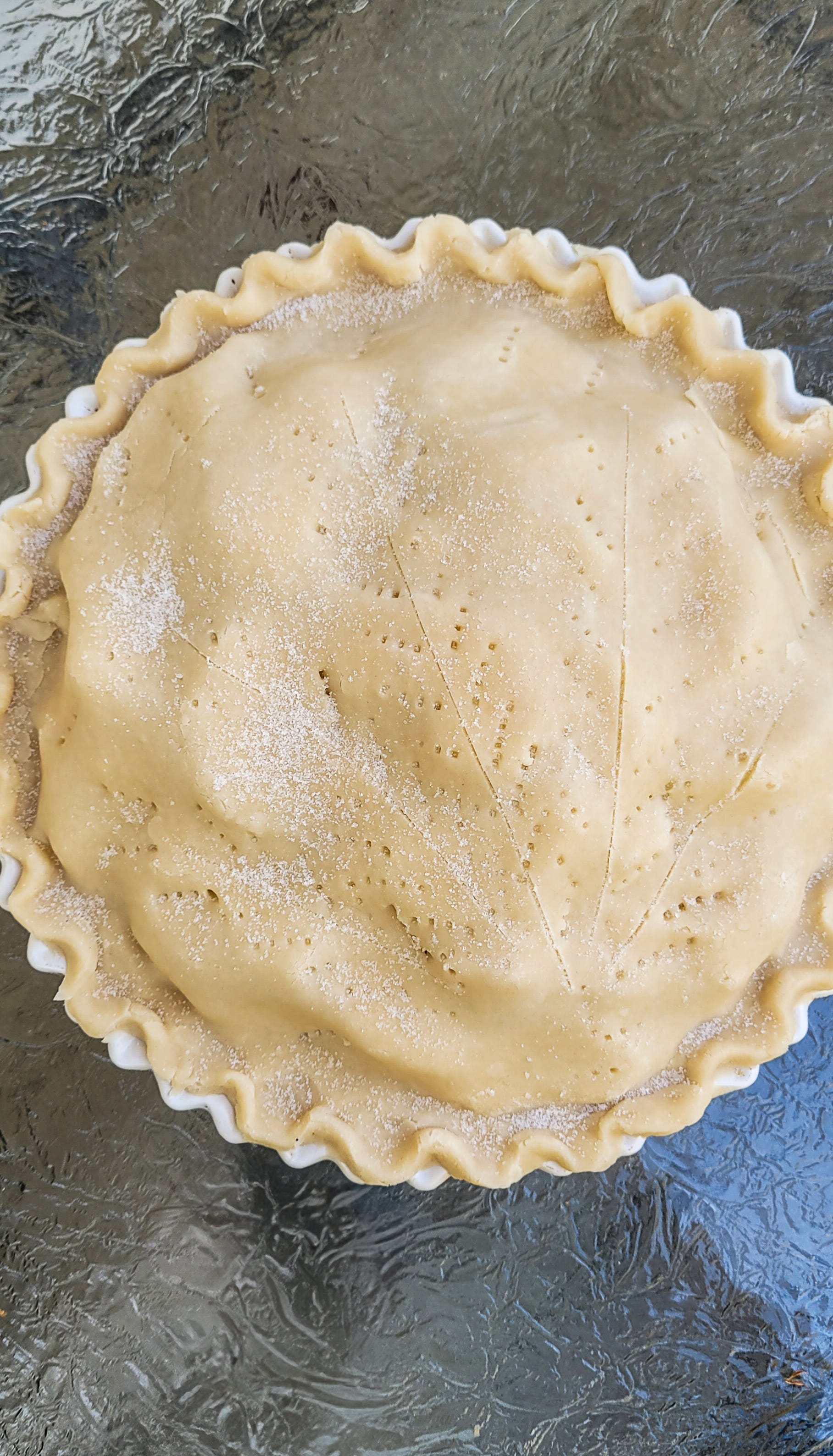
The best part of an apple pie baking in the oven is the scent that wafts through the kitchen—announcing, with patience, what’s soon to come. When the crust was browned just so, I set the pie near the window to cool. I’ve never understood the fuss about warm apple pie; I think room temperature is best. The anticipation of cutting the first slice was tangible. How was my first apple pie going to taste?
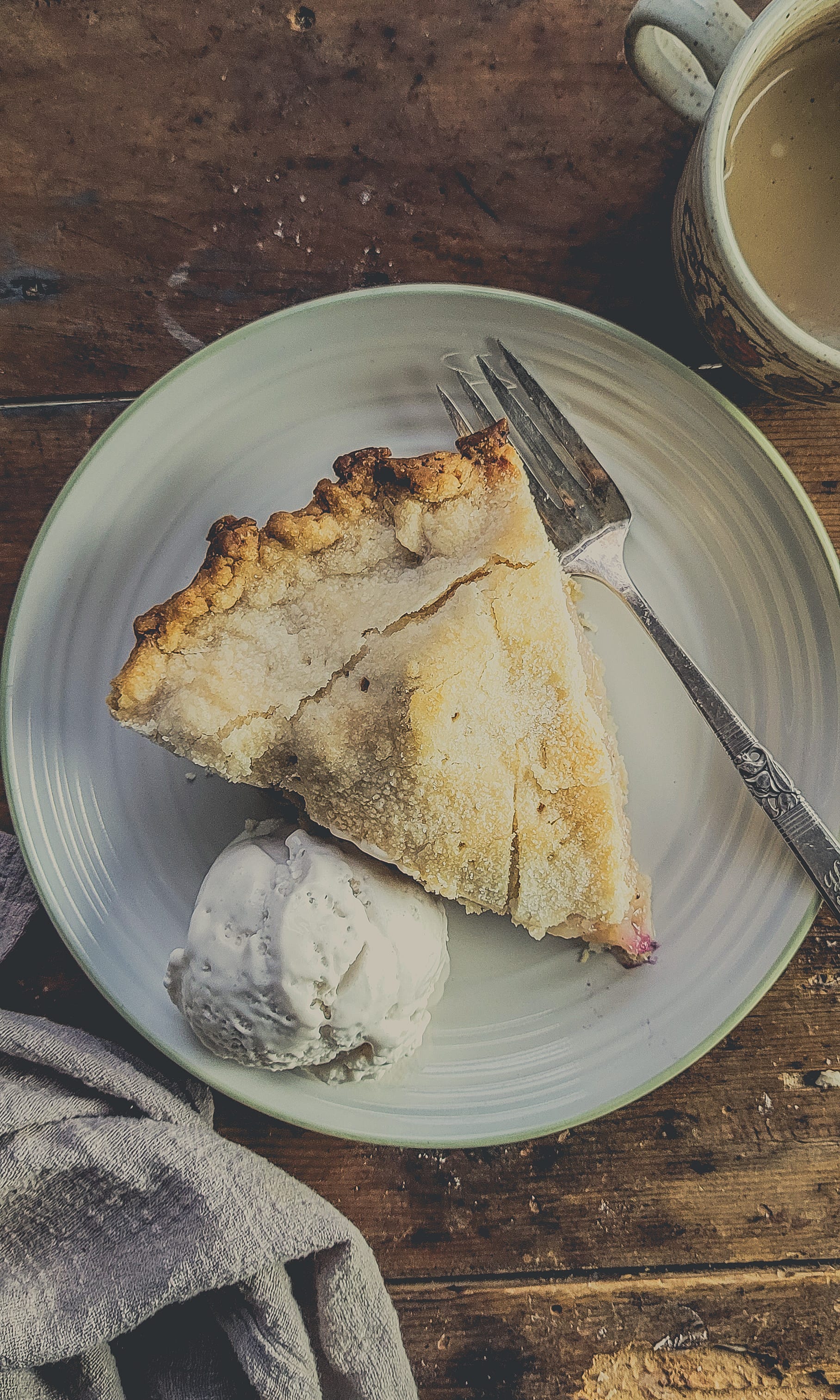
The apples had settled and slumped. Mum served us each a piece, a small scoop of cashew vanilla ice cream alongside.
The first bite was everything—sweet and gently spiced. The soft fruit against the perfectly flaked crust, a touch of cold vanilla ice cream melting over the edge—swoon-worthy. Something about this did feel rebellious. Maybe Eve was onto something after all.
Ohhh, this is beautiful and made me shed a couple of tears, it feels spot on in so many ways - but I sure laughed at your final, devil may care conclusion.
I enjoyed mine.